
The “Ave Maria,” sung to the Latin text of the “Hail Mary,” may well be the Catholic Church’s most famous liturgical hymn – but, surprisingly, this song was not intended for these lyrics. Franz Schubert, the composer, originally wrote the music for the German translation of song verses from the Scottish poet Walter Scott’s novella-in-verse, “The Lady of the Lake.” Although this poem may not be a prayer in the strict sense that the “Hail Mary” is, it is a beautiful and highly spiritual text to pray with, even if our context may seem outwardly very different than that of the poem.
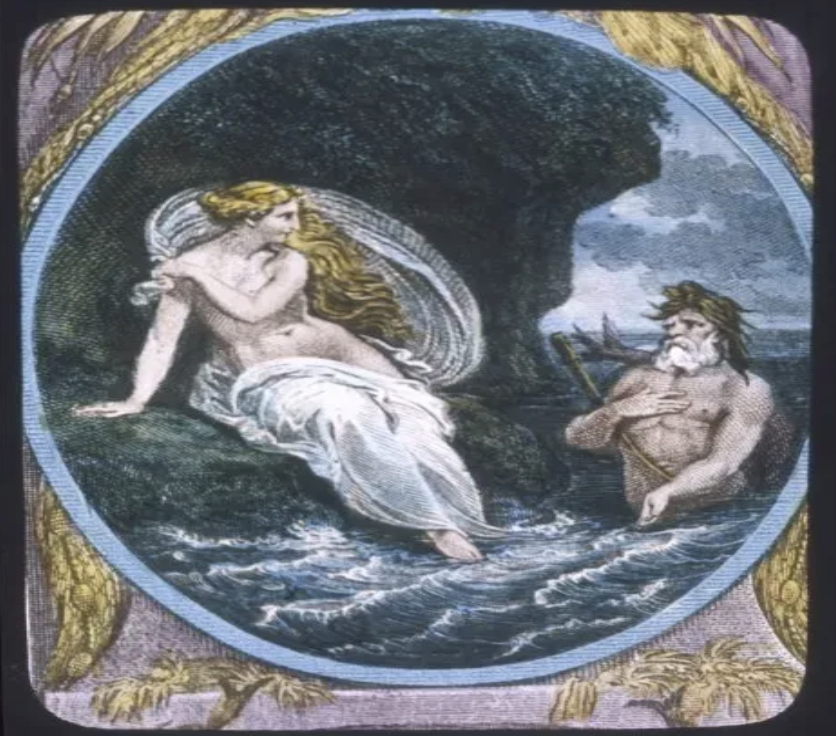
Completed in 1810, the novella pulls on both themes from the concomitant Romantic movement and local influences of old Scottish ballad tales. “The Lady of the Lake” opens with a lost hunter wandering through the Highland woods and his encounter with a mysterious young girl (the Lady of the Lake, or Ellen), who lives in the wilderness by the Loch Katrine. It then follows the subsequent adventures of these characters’ now connected lives. The plot rests heavily on its historical context of Scotland around 1529, and it plays off of King James V’s attempts to conquer the local robber-bands and fights against the Douglas clan to secure his power.
Schubert took the lyrics for his “Ave Maria” from the third canto of the novella, which is titled “Hymn to the Virgin” by Scott, but it is more commonly known as “Ellen’s Third Song.” This hymn is Ellen’s “maiden’s prayer” to Mary for comfort and safety amidst the climatic conflict of the story, from which the singer is hiding in a lonely cave. The tune for Schubert’s song reflects this suspenseful and prayerful mood with the rolling melody it opens with. In the context of Scott’s story, these repeating, soft notes take on a caressing nature, as if asking for Mary’s help is in and of itself a relief.
The cave symbolism in the lyrics was intended to be literally interpreted since Ellen was singing in a cave, but they can also take on a metaphorical meaning in our own prayers. These ‘caves’ can be any situation or place of our lives that are particularly difficult or uncomfortable, and we ask Mary to be with us in companionship during these times. “The flinty couch we now must share/ Shall seem with down of eider piled,/ If thy protection hover there.” God’s mere presence in hard moments can itself make them easier to bear and sanctify them, if we trust in His power and love for us.
At the end of every verse, Ellen first asks Mary to hear her prayer as a fellow “maiden,” trying to call out Mary’s empathy by comparing their positions in life. However, the slight mellowing of Schubert’s music for the next verse conveys a newly arising sentiment: “Mother, hear a suppliant child!” Here, Ellen does not attempt to equate herself with Mary’s, but she instead shows a deep humility in her new request: to hear her merely as a mother would a little child. Nonetheless, Ellen’s comparisons do hint towards a beautiful reality; God, whose level we can never fully be on as humans, came down to us in Jesus’ Incarnation and became like us so we could relate to Him, and He to us. It is this duality that Scott is able to touch on through Ellen’ song – God’s infinite power to help us as the omnipotent Creator, but also His great love in coming down to be like us.
It is ironic that one of Walter Scott’s greatest influences is not one of his books nor even Ellen’s Third Song, but Schubert’s “Ave Maria” that the latter inspired, sung now with the traditional “Hail Mary” prayer. However, this is part of the mystery of the universality of prayer. Although the form may seem very different, Ellen’s Hymn and our “Hail Mary” do contain may of the same spiritual substance, so the music for one can be easily transferred to the other. These are the sentiments we should all hold in our personal prayers: honoring Mary as the Immaculate Mother of God, and asking for her help with simple faith and humility that she will aid us. “Then, Maiden! Hear a maiden’s prayer;/ Mother, list a suppliant child!/ Ave Maria!”
By Elisabeth Smith ‘28, Co-Assistant Editor-in-Chief
28esmith@montroseschool.org