Have you ever heard of a woman who preferred a double-bitted axe and six-foot flensing knife over a regular scalpel to dissect the whales she used for research, had two children while earning her medical degree (in the 1940s), and loved to drink bourbon even at 95 years old? If you’ve never heard of Dr. Frances Oldham Kelsey, you can check out this webinar in which Dr. Cheryl Warsh discusses her book Dr. Frances Oldham Kelsey, the FDA, and the Battle Against Thalidomide with Ashley Bratcher (Women Telling Stories That Matter Part 1) and Dori Zavala who are both producers of the forthcoming Frankie movie (you can see the movie’s mood board here). As Dr. Warsh’s book details, in 1938, Dr. Frances Kelsey became the first person to earn a doctorate in pharmacology from the University of Chicago. After testing the causes of elixir sulfanilamide’s lethal effects and helping to develop antimalarial drugs during WW2 as a university research assistant, she landed a job as a medical officer at the FDA. Through persistently refusing to accept Merryl Pharmaceuticals’ New Drug Application, Dr. Kelsey prevented the drug thalidomide, which caused birth defects, stillbirths, and miscarriages from being distributed throughout the nation. With her short hair, masculine-given name, anomalous interest in science, and hobby of hunting, shooting, and tree-climbing with her older brother, Dr. Kelsey didn’t always fit the mold that women of her time were expected to conform to. This didn’t always land well with her traditionally-minded superiors at St. Margaret’s, a Christian girls’ school in Victoria, Canada. One St. Margaret’s classmate recalled years later: “…I remember how [the teacher] used to throw up her hands at Frankie, the rugged individualist who didn’t care a bit about conforming to the current idea of what a female teenager should be!…” Yet, it was Frankie’s “manly” brazen nature and successful scientific endeavors that inspired women across the world. One supporter, “Mrs. Charles G.” from Eddington, Pennsylvania wrote to Frankie in the 1970s: “They can call you ‘stubborn’ or anything else they want to…you are the kind of [person] who makes the rest of us proud we are a lady. Those movie star tramps [who often acted more stereotypically feminine or hypersexualized] make us feel degraded.” (Dr. Frances Oldham Kelsey, the FDA, and the Battle Against Thalidomide) Evidently, Mrs. G felt affirmed in her femininity by seeing, for a change, a woman in the spotlight who didn’t embody stereotypical feminine traits, roles, interests, and appearances. To Mrs. G and many of her female contemporaries, the idea that a gender atypical woman like Frankie was not in fact a woman would have been puzzling at best and perhaps offensive at worst. So, how did we get to our current point in time when we are invited to question whether a gender atypical woman is really a woman at all?
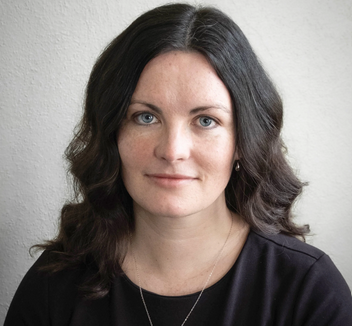
Dr. Abigail Favale, a Professor of the Practice at the University of Notre Dame, answers this question in her second book, The Genesis of Gender: A Christian Theory; it parses the historical circumstances, philosophical forces and technological developments that catalyzed the widespread embrace of the “gender paradigm,” in which manhood is disconnected from maleness and womanhood is disconnected from femaleness. In her third book, Our Lady of the Sign: A Novel, Favale espouses the story of a college professor in her 30s who travels back to her hometown in the midst of unease, experiences the rekindling of a long lost love, questions the disparate and narrow paths she has been invited to pursue as a woman, contemplates a weighty decision, rediscovers buried pain, and reckons with supernatural forces. Unlike many Christian novels, Our Lady of the Sign does not shy away from the complex emotions that accompany common uncomfortable female embodied experiences such as menstruation and, sadly, abortion. Also unique to Our Lady of the Sign is the portrayal of a woman’s sexual missteps “with a sense of realism but not gratuity,” to show that people who make unchaste mistakes are “kind of flailing around trying to be happy, and not monsters.” (Ignatius Press Interview). Favale has elsewhere affirmed the importance of Christian communities emphasizing chastity (i.e., the virtue of ongoing sexual respect and temperance) rather than virginity alone, so that those who have already made mistakes do not feel corrupted or incapable of living out their sexuality in a holy way in the future. (Kissing Purity Culture Goodbye Article) In her first book, Into the Deep: An Unlikely Catholic Conversion, Favale sheds light on what sparked her interest in gender, feminism, and embodied experiences.
As a “competitive, headstrong, athletic” girl growing up in a bible-belt setting, Dr. Favale didn’t always act in accordance with the status quo. (The Catholic Woman Article) As she grew older, Favale often felt she was “failing to live up to the ideal” version of what a woman was supposed to act and look like, being teased in high school for having “man legs and a moustache.” (Genesis of Gender) Favale’s search for her dignity and meaningful purpose as an outside-the-box woman prompted her intellectual journey through various strains of feminist thought and gender theory, first as a committed Evangelical, then as a “woke” gender studies professor, and finally as a Catholic writer and speaker. As someone who has experienced the harm of constricting notions of masculinity and femininity, and intensely examined the mainstream gender paradigm from both a postmodern perspective and Christian worldview, Favale is particularly adept at pointing out nuances overlooked by popular conservative commentators and subtle contradictions within the prevailing cultural conceptions of gender.
A theme that permeates all of Favale’s writing is the preeminent meaning and beauty of the sexed body. Favale emphasizes that, according to a Catholic anthropology, one’s maleness and femaleness are not crude biological mechanisms for the propagation of our species, but rather dignified symbols of a sacramental reality, of God’s love for humankind and the power of humankind to be transformed by that love and let it bear fruit. Favale explains this concept more in depth in her article Rethinking Complementarity: From Stereotypes to Icons, in which she affirms: “Bodily sex is not made purposeful through mandated tasks, restrictive temporal roles, or fashionable aesthetics. The supreme meaning of the sexed body is to be a living, visible icon, one who gestures continually toward the world beyond the veil.”
Favale also points out that an understanding of sexual difference as meaningful is integral to a Christian worldview rooted in scripture. In Genesis, as Favale highlights, the peak and completion of the creation narrative is when the sexually undifferentiated (hu)man whom God put into a sleep of non-being awakes as two new human beings: one male and one female. This contrasts with other ancient near eastern creation narratives (e.g., the Ennuma Elish) in which sexual differentiation is either incidental or nonexistent. As Favale emphasizes, embedded in the creation narratives of Genesis are two key truths: (1) men and women are equal in dignity and both made in the image and likeness of God (a truth that was quite countercultural at the time Genesis was written/ first culturally received) and (2) sexual differentiation is an intrinsically meaningful and dignified feature of our humanity, not a defect (a truth that is quite controversial in our current time). Thus, as Favale elucidates, the foundation of controversial Christian convictions regarding marriage, children, and gender are not rooted in the ramblings or writings of a misogynist pope, priest, or pastor but rather in the perennially unorthodox creation narratives of Genesis.
Because of her belief in the sacramental meaning and intentional design of the sexed body, contrary to mainstream gender theorists and (most) feminists, Favale defends the Christian view that one’s identity as a woman ought to be rooted in (but certainly not reduced to) her femaleness. As an intellectual with a holistic view of the human person, Favale corrects the tendency of those across the ideological spectrum to regard maleness or femaleness as solely defined by anatomical features. Favale asserts femaleness and maleness are characterized by the organization of the whole organism around the potential for either motherhood or fatherhood. Specifically, Favale defines femaleness as the organization of a human being at the chromosomal, hormonal, and anatomical levels to support the production of egg cells (as opposed to sperm cells (male)), thereby encompassing infertile females and females whose sex is hard to distinguish (due to rare congenital abnormalities) within the category of femaleness.
As Favale explains in The Genesis of Gender, second wave feminists sought to separate womanhood from the omnipresent potential for the more taxing elements of femaleness (viz. motherhood) by expanding access to contraception and abortion. Such a strategy for women’s liberation, as Favale points out, is built on the premise that “women are oppressed not merely by social forces, but by their biology.”
Favale notes in an article for the McGrath Institute that “this [premise] reveals an ironically masculine bias. Rather than seeking to change social structures to accommodate the realities of female biology, the feminist movement, since its second wave, has continually and firmly fought instead for women to alter their biology, often through violence, so that it functions more like a man’s. Tellingly, the legal right for a woman to kill a child in her womb was won before the legal right for a woman not to be fired for being pregnant. The message is clear: women must become like men to be free.”
To show where the masculine bias in mainstream feminism originated, Favale directs us to French existentialist philosopher Simone De Beauvoir who wrote: “to give birth and to breast-feed are not activities but natural functions; they do not involve a project, which is why the woman finds no motive there to claim a higher meaning for her existence; she passively submits to her biological destiny. Man’s case is radically different. He does not provide for the group in the way worker bees do, by a simple vital process, but rather by acts that transcend his animal condition.” According to De Beauvoir, there is no meaning intrinsic in basic female biological functions such as pregnancy, birth, and breastfeeding because they are natural and merely female “biological destiny.” (Genesis of Gender) Many pro-choice feminists today would not go as far as De Beauvoir to assert that pregnancy and birth are devoid of meaning, but many, a la De Beauvoir, claim that restrictions on abortion access reduce women to their biological function and preclude them from opportunities for meaningful excellence.
According to a Christian perspective, Favale clarifies, great meaning does not need to be created by external or ambitious activity, but rather is given by the sacramental reality of the body. Even the parts of our bodies that cause us the most discomfort or shame are meaningful because of their connection to a purpose or telos. To this point, Favale writes: “My chronic disease with having breasts, especially cumbersome lactating ones, is temporarily suspended in the wordless communion of breastfeeding. Even when I’m not lactating, even for the woman who never lactates, I now understand that breasts are visible signs of feminine self-gift, the capacity and call to nourish the souls and bodies–the full personhood—of those who come under our care… I’ve had the gift of experiencing their telos: sources of life and sweet milk from my babies.” Favale, like British proto-feminist Mary Wollstonecraft and the early women’s rights advocates in the United States, asserts that the discomfort intrinsic to common female experiences “is not punishment from on high but rather permitted for one’s edification,” and is a prime opportunity for self-gift. (The Rights of Women: Reclaiming A Lost Vision) As Favale specifies in her conversion memoir, virtues like self-gift and sacrifice “are not weaker, delicate traits best left to the ladies…but rather the lifeblood of spiritual vitality [for both men and women].” Thus, femaleness (and the self-gift femaleness so often entails) is a unique avenue to the type of excellence that all humans, not merely women, are called to strive for.
In this way, Favale’s work illuminates not only why motherhood by itself can be considered a path to meaningful excellence, but also why it is beneficial for womanhood and femaleness to be inseparably connected: there a masculine bias in a feminist rejection of femaleness. Another reason Favale gives for keeping ‘woman’ and ‘female’ tied together is that if our concept of what a woman is isn’t rooted in femaleness, “there is no ground for these concepts except restrictive or regressive stereotypes (e.g. boys have short hair, girls have long hair, girls wear dresses, all girls are interested in pursuing romantic relationships with boys, men don’t do laundry, women are people pleasers, men are not emotionally aware, etc.)” (Genesis of Gender). Consequently, as Favale foregrounds, when our cultural conception of womanhood is not rooted in femaleness, being a girl becomes a narrow box, rather than a roomy space that encompasses a wide variety of female preferences with regard to appearances, relationships, and endeavors.
However, as Favale makes clear, a quick look at history can explain why feminists have sought to “free” women from the persistent potential for motherhood, and thereby have (indirectly) spliced femaleness out of our definition of what it means to be a woman.
Women’s unique capacity for carrying and bearing new life has been used to bar women from notable opportunities, such as voting and entering the workforce. For example, a justice who ruled against women’s right to practice law in the state of Illinois (1873) justified his argument on women’s immanent maternal function: “The paramount destiny and mission of woman are to fulfill the noble and benign offices of wife and mother. This is the law of the creator.” (Bradwell vs. Illinois)
While extolling motherhood, this justice (and many other powerful figures in the 19th and early 20th centuries) asserted women’s capacity for motherhood ought to bar them from the chance to contribute to the public sphere. Hence, we can see why feminists in the modern period have sought to procure insurance against childbearing. Contrary to the aforementioned justice (and like-minded gentlemen who write and speak today), Favale maintains that women’s biological function of motherhood, while deeply meaningful in itself, ought not to prevent women from undertaking professional pursuits.
As a mother, professor, author, and public speaker, Favale has stressed the importance of a supportive husband for her success both personally and professionally. In The Genesis of Gender, Favale attests: “In my own marriage, there has never been the expectation that child-rearing and home-making is my sole responsibility–it is our shared vocation as a couple. Our marital motto is a line from Homer’s Odyssey: ‘No finer, greater gift in the world than that, when man and woman possess their home, two minds, two hearts that work as one. Despair to their enemies, joy to all their friends. Their own best claim to glory.’”
Indeed, a husband sharing domestic duties and supporting his wife’s professional undertakings has been a factor common to many impactful women throughout history. Dr. Frances Kelsey, the aforementioned doctor, FDA officer, and mother living in a time when it was uncommon for married women to work outside the home, had a husband who supported his wife so much that he even charted her menstrual cycle. (Cycle charting is a practice that Favale has promoted as a tool for recognizing underdiagnosed issues in gynecological health and for fertility regulation methods that “work with–not against–the natural order of the female body.” (Rethinking Women’s Reproductive Health | Church Life Journal)
Many women like Favale and Frankie have reaped the fruits of having professional influence and fulfilling personal lives not as autonomous individuals, but rather as interdependent wives and mothers, not only depending on their spouses for assistance and encouragement, but also providing subsistence for their completely dependent offspring. The fiction of human autonomy (that the experience of motherhood especially undermines) is another major emphasis throughout Favale’s work, especially when it comes to addressing abortion. As mentioned, Favale reminds audiences that bodily autonomy by nature does not exist for women in the same way it does for men: a woman can become pregnant and house a developing life within herself while a man cannot. In a video series on Catholic feminism, Favale explicates the importance of conceptualizing a pregnant mother and her unborn child not as two autonomous entities but rather as a dependent dyad, asserting: “the well-being of the unborn child can’t be separated from the well-being of the mother…the very phenomenon of pregnancy connects those together…it is the job of Catholic women to awaken pregnant women in difficult circumstances to their own dignity and the dignity of the life within them…” Later in the video, Favale adds: “unplanned pregnancies [can put women] at great social and physical risk…it is not enough for the pregnant woman to choose love over fear…to say yes to the baby…we must all build a culture of saying yes to life… by reaching out to and personally supporting women…including in a very concrete way with material assistance…”
In her article Confessions of a Feminist Heretic, Favale explains how seeing her son at twelve weeks gestation “waving and churning in his amniotic ocean,” led her to rethink her previous belief that abortion ought to be condoned at least throughout the first trimester of pregnancy. At the end of the article, Favale summarized: “Becoming a Catholic did not make me pro-life; becoming a mother did. Motherhood unmasked the illusion of my own autonomy…The illusion that an unborn human being is not a human being…”
While affirming that all people–from those barely visible in the womb to those crippled by age–carry sacramental meaning through the divine iconography of their sexed bodies, Favale acknowledges that some people experience deep discomfort in their maleness or femaleness. As opposed to medicalizing the body through the process of transition, a more effective path to healing, Favale argues, is to first explore factors (e.g. sexual abuse, eating disorders, depression, hypersexualization by community members or the culture at large, etc.) that often are a common denominator in young people seeking transition, and then have medical professionals use pyschotherapy to ameliorate mental distress. In the Genesis of Gender, Favale narrates the stories of several people who suffered from gender dysphoria, transitioned, and endured unexpected physical effects such as difficulty speaking (due to vocal cords tightened by testosterone) and nearly fatal strokes. Favale asserts we need to normalize the experience of gender dysphoria so that those suffering do not feel shame that prevents them from seeking help and healing. At the same time, Favale posits we ought not to classify gender dysphoria as a healthy experience because “to reclassify disorder as order forecloses the possibility of recovery…I think of my own battles with anxiety, depression, self-harm. I don’t want someone telling me those things are normal and good. I want to be healed.” (Genesis of Gender)
In her writing and speaking on issues related to sexuality and gender, Favale emphasizes the need of Catholic and Christian communities to approach those experiencing gender discordance not with a spirit of rejection or suspicion but rather with a spirit of accompaniment. To that end, in partnership with the McGrath Institute for Church Life at the University of Notre Dame, Favale is launching the Gender Accompaniment Project which will highlight the stories of adult committed Christians who have undergone distress stemming from their biological sex. As Favale stated in a promotional video for the program, the goal of the project is to step away from the dehumanizing debates of the culture wars and give a voice to those suffering while pursuing a relationship with Christ.
The unique depth and breath of Favale’s work calls to mind a sentence from a blog post entitled “Be the Light” written by Ashley Bratcher in 2014: “Yes, we are called to be set apart, but I don’t believe that the scripture means that we are to walk around like little aliens from Planet Christian with a holier than thou attitude.”
One way Favale sets herself apart is by putting into practice (to the fullest extent) what she preaches. Favale’s colleague Leah Libresco Sargeant noted: All throughout the conference [Dr. Favale hosted]… [Favale had set up] a little informal crèche for children in the back of the big room…It’s one thing to write on the goodness of God in making men and women, it’s another to orient your professional life around honoring that gift.” (An Interview with Leah Libresco Sargeant, Author of “The Dignity of Dependence” – University of Notre Dame)
By weaving in personal accounts of wrestling with her own doubts about Church teaching into her academic analysis, Favale facilitates a sense of connection with her readers–no matter where they are in their spiritual journey. With her giant tattoo, nose piercing, cat named after a Polish philosopher, and previously earned Feminist and Women’s Studies Association Book Award, Favale is quite the opposite of “a little alien from Planet Christian.”
Through telling stories that matter in various ways, Favale leads each person closer to the truth that they are “fearfully and wonderfully made.”
By Gabriella Dansereau ‘26, Contributing Writer
26gdansereau@montroseschool.org