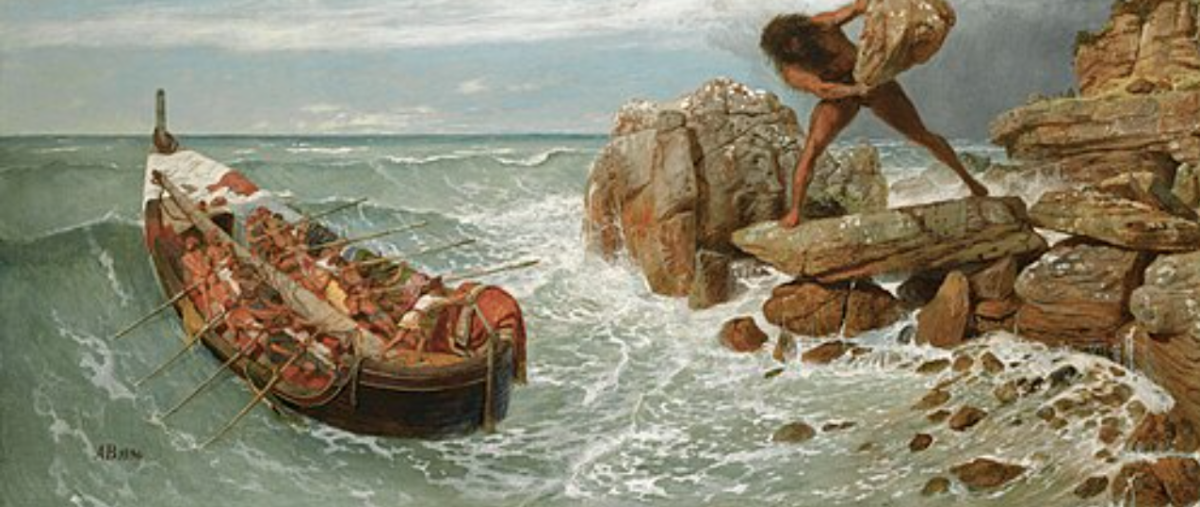
This summer, Director Chrisopher Nolan’s Odyssey was released in theaters, depicting the ancient Greek hero Odysseus attempting to find his way back to his homeland, Ithaca, in order to reunite with his loyal wife Penelope and son Telemachus. However, as audiences witness deafening scenes of screaming cyclops and horrible sights of witchcraft, it is very clear that this journey was not easy.
Since 2020, this is not the only depiction of Odysseus’ journey. A recent musical released on Spotify and Apple Music, called Epic: The Musical, also depicts the journey of Odysseus back to his home where suitors drain his house and torment his wife. But unlike Nolan’s Odyssey, the Greek hero is depicted in a much different light, and both are ultimately extremely altered from the original recorded wily Greek hero.
It is clear that the ancient civilizations have always been attractive to society since the beginning of the renaissance to now, going in and out of favor as politics and time change. And it is once more that a revival of these ruins and orated myths are rediscovered, during a time of momentous change in which people look to guidance at civilizations that thrived in a world of absolute chaos, death, and ignorance. For these old worlds are a hope of light amidst darkness, a place to seek a companionship with suffering and sorrow, and for man to ask himself who he or she is by reflecting on what we once were and still are.
However, it is very clear that no retelling of these crumpled worlds and their cultures is ever the same. Just as how the Romans changed their myths of Romulus and Remus depending on their position in Roman politics, so do we change how we see the times of old when we have a certain view on our values. And what’s better than to support our perception of something, if not an acclaimed, heroic warrior who repeats our exact thoughts in the media?
This is very clear from Nolan’s Odyssey. As I watched it in theaters, I did not see the caricature of a perfect Ancient Greek man, as displayed in the ancient text: unremorseful at his wily acts, confident in his power, faithful to the gods, and proud of his fighting son. Rather, I saw a man crippled by grief and an illusion of failed responsibility, deeply disturbed at the concept of war, and stubborn against his son fighting the suitors.
It is very clear from both Epic: The Musical and Nolan’s Odyssey: the remarkings on war are minimal, if not abstained completely from the original text. The Odysseus in Nolan’s Odyssey continually reminds man that diplomacy and trust, when broken, leads to stagnation of civilization, while Epic: The Musical both romanticizes and warns against aggression, justifying Odysseus’s wily acts for the sake of love, while also depicting Odysseus as unable to love himself due to his sinful acts.
Both of these depictions further emphasize Odysseus’s grief to be rooted in his supposed failure to save his crew. It is unmistakable to see a message through both that a leader has the responsibility to help his men morally, especially in the face the demanding, all powerful gods, but regardless there is also a limit to a king’s guardianship over others and that every leader must accept that there are times when saving someone just isn’t possible.
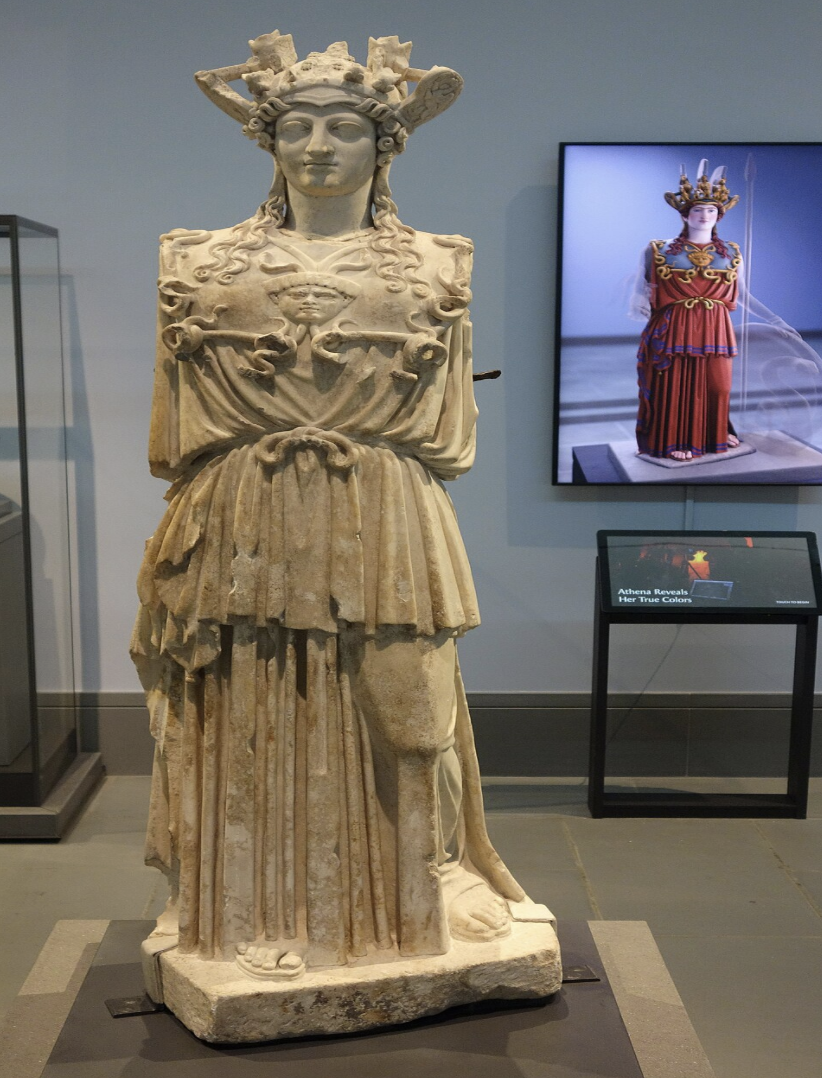
This latter point shown in the media does resound more with the true Odysseus, but is yet again exaggerated and overshadows the other aspects of Odysseus’s character within this tale. Odysseus’s wily tactics are transformed often into foolish pride within Nolan’s movie, his relationship with Athena turned cold and distant, more of a therapist situation than a mentor and mentee relationship. And most of all in Nolan’s movie, the rest of the gods are hidden from direct roles, truly embodying the perception of the tale from a human perspective rather than the divinely endowed world depicted in the true text.
Nolan’s depiction of the Odyssey seems to resonate more with the common experience of man today—his Odysseus highlights our own exhaustion of war, our sense of crippling expectations, and the constant sense of no control and our isolation from others, ourselves, and that sense of wanting something greater than us which haunts every person’s soul. But besides resounding that sense of unmistakable loneliness, the most potent message of the movie was to avoid fighting, something which the ancient Greeks would have definitely scoffed at. Indeed, the theme, though deep in itself, would have more suited an adaptation of the Aeneid or the Iliad in comparison to the Odyssey.
But besides the allure of the classical world, why is our media so surrounded by these depictions and adaptations from a broken society? Why is Barnes and Nobles filled with retellings of Medusa in fifty different ways, why is Percy Jackson so popular, and all of the ancient books being reread, when all the while the classics departments and philosophy classes are growing smaller to the point of nonexistence in colleges?
Clearly a revival, just as many times before, is spreading a love of these ancient civilizations yet not without the same unmistakable criticism from our part. For now in a world where societal standards are so capricious, and when we continually hear conflicting opinions and crushing moral obligations which can’t help but seem to contradict, it is not surprising that our generation, especially the youngest, turn to what appears to be the beginning of culture, to the foundation of ideas, with the hope of recovering some consistent, trustworthy, and meritable guide or advice. When our world seems to be crumpling, the ideas of an already crumpled one are sown with the spark that led man to have something to ruin in the first place. The ancient world was the beginning of lives of intellect, complexity, and ideals of justice, love, and beauty all of which attract all of us more than any temporal good and the ignorance which seems to threaten to submerge us today.
It is clear that all of us crave the spark of that which led man to be illuminated, which is reciprocating itself through our media.Yet these old concepts are being intertwined now with new themes, such as seen in Nolan’s Odyssey and Epic: The Musical, both of which can risk tearing away the mystical aspect of the myths themselves or maybe bring even more light into their surface. It depends on what we want to hear and what we want to see, which will determine the fate of these retellings.
And it is this fact which brings us to ask ourselves if we owe any continuity between the themes originally from the old world and the values from the new when we make these retellings into movies and musicals.
Yes the reader may make a book great and may have his or her own interpretation, but do they not take root in their analysis and opinions from the book itself? And if people are craving to know the secret of what made towns of stone and dirt great, are filmmakers, writers, and musicians not obligated to show them the true value of the Greeks and Romans which shaped their actions?
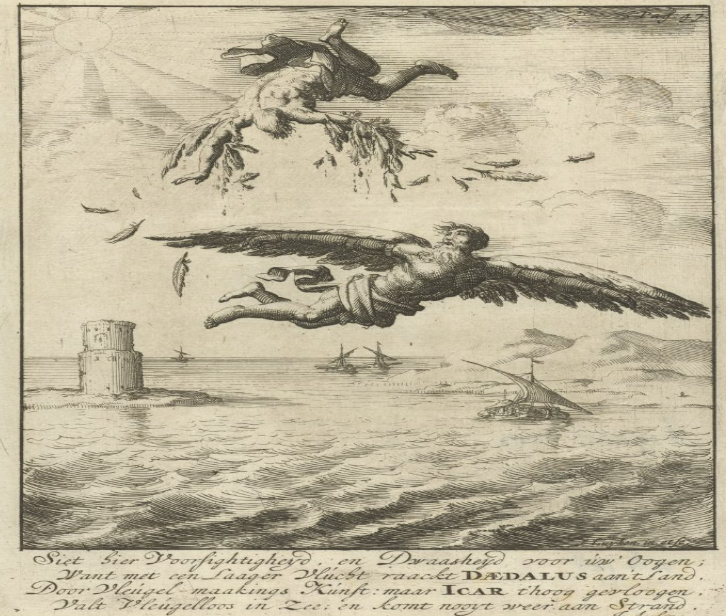
It is these questions which seem to follow us as we see multiple versions of Aneas, Odysseus, Icarus, Achilles, Medusa, and all of the other key Greek characters as well as Roman. But ultimately there is still a comfort in seeing the old world reawakened, the dust brushed off its history once more, as people, with searching eyes and souls, reopen their books of old and read it word for word.