
“I never let my schooling interfere with my education.” –Mark Twain
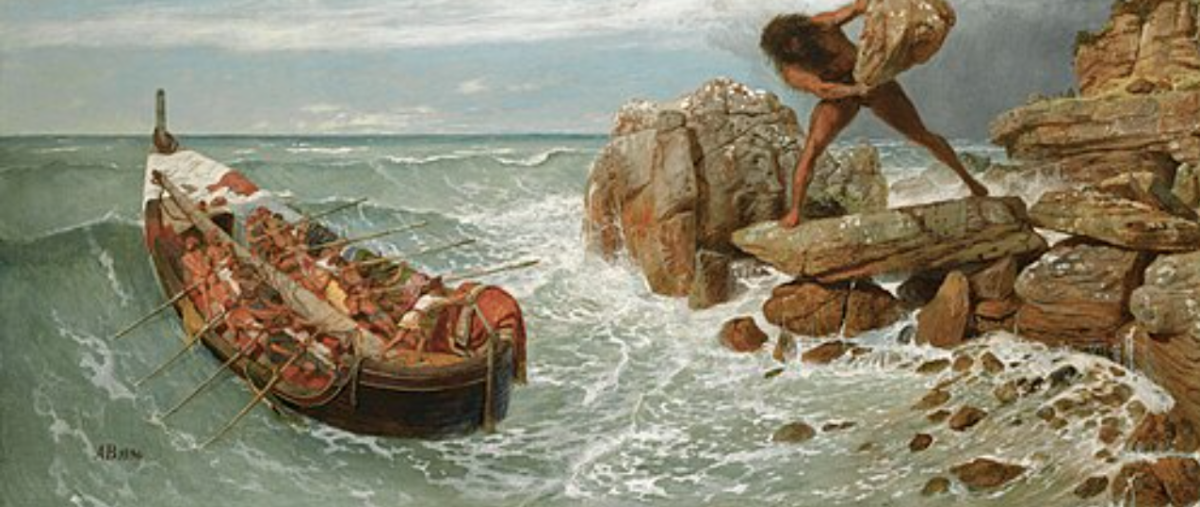
In our society and throughout the years, it always seems as though learning and knowledge is the bane of every students’ existence. When one thinks of books, memories of cold mornings, heavy eye bags, and a burned mind seem to haunt every emotion that comes with intellect, a ghost that taints an inherent gift by God into foul tasting. Even more so, our ability to gain an education has been further twisted, boxed, and simplified by social media: the pursuit for truth transformed into the goal of gaining self-worth from perfect grades and an admission into an Ivy League, turning our hard work into our very own rock as students become their own Sisyphus.
Perhaps it is these reasons, work which pushes the limit of sanity for nine months straight and unrealistic, crippling expectations, which have stagnated the genuine desire for truth and which has encouraged students to, in their leisure, turn to mindless scrolling on never ending screens rather than hobbies such as reading, sports, and other activities.
Although it may seem contradictory to society’s expectations, leisure is essential to every person’s formation, especially for teenagers and children, whose minds are shaped not only by science, English, and math, but by other concepts such as virtue, much of which is instilled through outside learning. This learning, however, is not as direct as it is in school, but in that sense is more long-lasting and necessary in our everyday actions and lives. While learning what a parabola is is only memorized for a quiz on Saturday, the question of heroism, morality, and our priority in life is constantly debated through books, music, and other means of leisure that pound themselves in our mind until they become almost synonymous with our being.
Clearly, the loss of this meaningful leisure through the exchanging of social media is detrimental to our well-being. This leisure and implicit learning not only shapes our soul, but our emotions as well, and the loss of education for fun could be directly correlated to the intense anxiety and despair which follows our generation, especially around school.
By failing to learn out of our own volition, we involuntarily box anything intellectually engaging into a purely accomplished, perfect based part in our lives. As we continue to do this, we solely remove the genuine merit in goodness and love that comes from finding the truth by seeking to gain knowledge. We soon see biology only as a means to become the girl who has a 100, failing to appreciate the beauty of nature or how that subject points us to God. But if we were to love biology, and therefore pursue it outside of school, we see biology not merely as a job and ourselves as a machine, but as something in which we can find genuine things to appreciate.
Learning for fun is one of the most accessible things to do in our generation but we must ensure to do it with care and be scrupulous of our intentions. Learning for the sake of learning should not be purely a means to appear smart or look good for colleges, or something which should be a byproduct and not the main goal. Doing things such as reading a novel, writing a poem, singing a song, or researching something that interests us is all a way to learn something, even if it doesn’t appear to be at first.
Simplifying these aspects in life, such as the gaining of knowledge, can lead not only to the death of genuine interest and set us up for high burnout inevitably down the road, but it also leads to the stagnation of people’s morality and their ability to judge events in life with an active mind rather than a passive one which purely memorizes facts. It is always important, therefore, to remember, even as we take a stressful test or prepare for an essay, that our dignity is free of a grade. The goal of learning is not to be perfect nor to be a god, but to meet the eternal one and to know Him and love Him in His greatness, which shines throughout the world and through our very textbooks.
By Regina Maricich ‘29, Classics Editor