My Experience with the 2026 FIFA World Cup
“IT’S INCREDIBLE! IT’S REMARKABLE! IT’S ALMOST UNBELIEVABLE!” If you were one of the 2.7 billion viewers who was lucky enough to witness the historic Argentina Cape Verde game on July 3rd, this exclamation of astonishment and utter disbelief may sound familiar to you. As 23-year-old Sidny Lopes Cabral ran into the stands to celebrate this major accomplishment with his loved ones, the world watched, jaws dropped and eyes wide. Cape Verde, an island off of the coast of Africa with a population of 529,000 people, was truly giving Argentina, a country home to over 46,000,000 residents and the greatest soccer player of all time, a run for their money. As the world’s most watched global sporting event, the World Cup is bound to gain traction every time. However, the 2026 FIFA World Cup was truly something special.
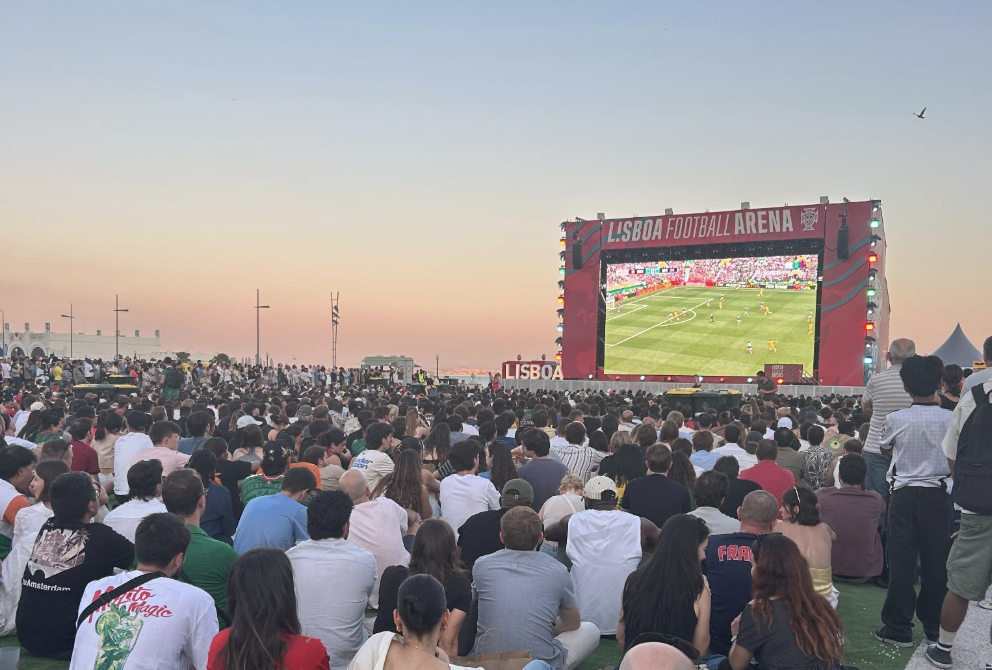
As my dad and I approached the Praça do Comércio in Lisbon, Portugal, I had no idea what to expect. I had never witnessed a communal sporting event with as many eager and passionate fans in my life. It was June 11th, the day that the 2026 FIFA World Cup would start, with a Group A match between South Africa and Mexico. Although Portugal was not scheduled to play for another week or so, one thing that I had learned on this trip was that they would never miss a chance to express their love and devotion to Christiano Ronaldo. From young, agile boys to older women with graying hair, there were several Portuguese in their CR7 jerseys, all heading in the same direction. When the large, inflatable screen came into view, so did the massive crowd of eager fans. Rows of food trucks lined the square, a large turf mat was spread out before the screen, and a glistening ocean sprawled for miles beyond. My dad and I soon found an area where we could watch the game, and as I breathed in the salty, fishy, and fresh air of this seaside city, I turned towards the illuminated screen, unaware that this would be the start to a truly unforgettable month of historic soccer and inspiring camaraderie among the most talented nations in the world.
As a sharp, electronic chime greeted my ears, I groggily sat up, pushed the sleepiness out of my eyes, and glanced at the alarm clock beside my bed. 1:58 AM. I reluctantly thrust the warm quilt away from me, and started making my way to my brother’s bedroom.
“What on earth are you doing?” I said, in an exasperated tone, as I watched him flip open his computer.
“Watching the US Paraguay game,” he responded casually.
Yep. Even though we were nearly 6,000 miles away from Inglewood, California, we still found a way to watch and support our country. This is how seriously my family (as yours should too!) takes the World Cup.
Sitting on the edge of my couch, I watched English players that I had heard my brother and dad idolize over the past several years, stride confidently out of the locker room. Harry Kane. Declan Rice. Jude Bellingham. Bukayo Saka. My sister fiddled with her hands, my mom stared intently at the TV, and I chewed on my lip. We were excited to watch the game, but the thought that this could be England’s last game in the 2026 World Cup loomed in the back of our minds. A shadow of “the heartbreak that could be” seemed to cast over our bright living room, darkening our hopeful mood.
Ding!
I picked up my phone, glad for the distraction from the tense mood around me. As I clicked on the video my friend sent me, vivid images of optimistic Mexico fans appeared, waving the national flag and chanting “Vamos Mexico!!!” She had been in Mexico for the past week, and was experiencing the Mexicans’ pride and passion for their men’s national soccer team first hand. I put down my phone, mildly irritated, and turned my attention back towards the TV. For the first thirty-six minutes of the game, I watched apprehensively, hope rising and quickly deflating within me as the English team progressed up the field and created opportunities which quickly led to turnovers. However, as Saka slid a beautiful ball just outside of the six yard box, and Bellingham’s head thrusted the ball into the bottom left corner of the net, I cheered loudly for the English team, and was ecstatic to see vivid images of thrilled supporters in red and white celebrating all around the packed stadium. Finally, after 101 minutes of watching a game that was far too close for comfort, I let out a withheld sigh of relief, as I wearily realized that England had barely managed to clutch a 3-2 win. However, my weariness quickly faded as “Wonderwall” started reverberating through the brilliant stadium speakers, and the English players lined up next to each other, singing at the top of their lungs. The fans quickly joined in, and although this special moment was occurring 2,800 miles away from me, the magical atmosphere and undeniably exuberant energy was apparent to me through the TV screen.
The 2026 FIFA World Cup was remarkable for players and fans alike around the world, and it brought glimpses of joy to the daily lives of many. Whether it was the Scottish enjoying nights out in Boston, the Japanese using trash bags to tidy up stadiums following games, or the Norwegians’ viking row echoing throughout the passionate crowd, each country brought something uniquely special to the table, and the unity among nations was uplifting to witness. With this, it is exciting to think about all that the 2030 World Cup will bring!
By: Grace Lynch ‘29, Sports Editor
29glynch@montroseschool.org