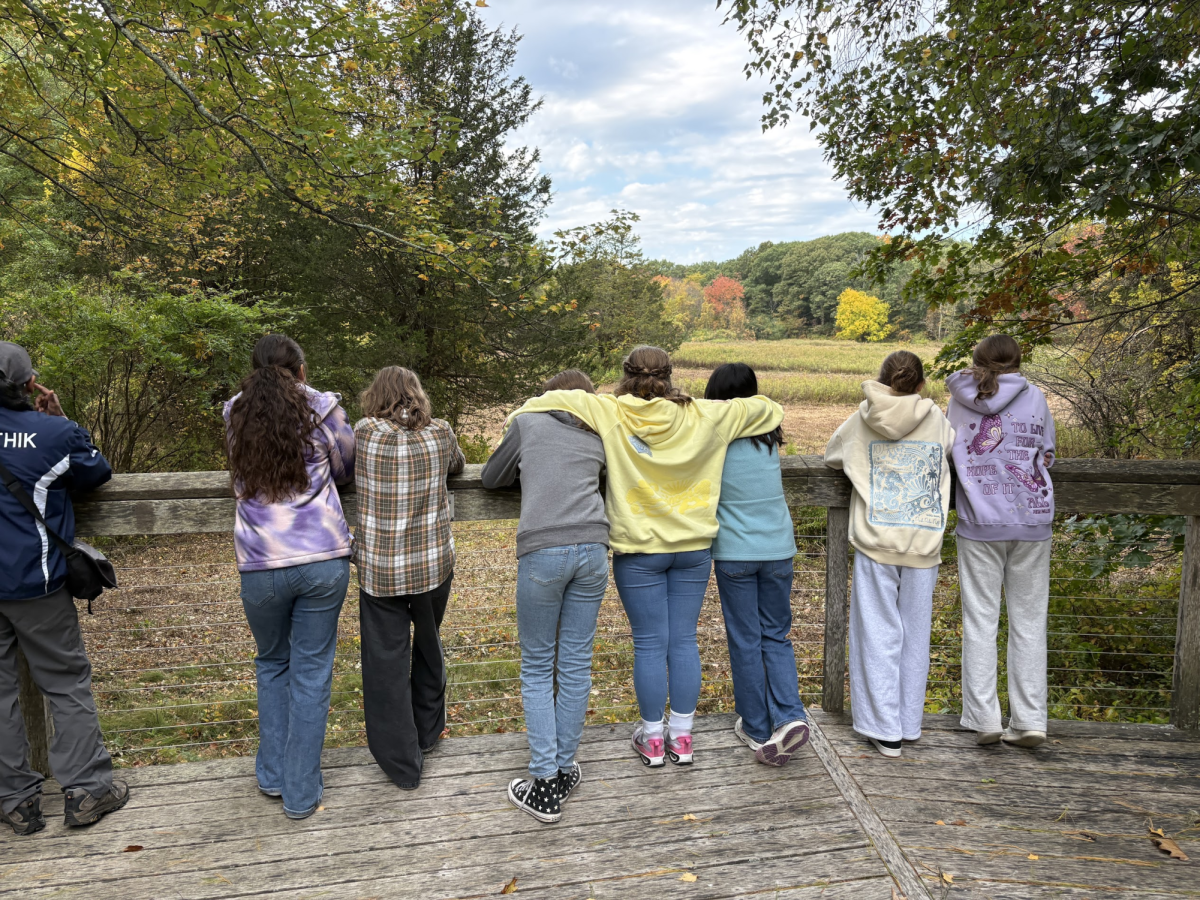
In late October, the 7th grade took a field trip to Mass Audubon’s Broadmoor Wildlife Sanctuary. Broadmoor is a wildlife sanctuary that provides for any animal (typically smaller ones) that passes by. Broadmoor provides a habitat for animals and plants, and its goal is to preserve nature and wildlife. The 7th grade was very lucky to have the opportunity to go on this field trip to Broadmoor. We enjoyed a tour around the sanctuary and were then broken into three groups. Each group had welcoming and helpful tour guides that showed us around the place. We got to learn about the different species living in the wetlands, experience the beautiful nature of Broadmoor, and discover the different feeding strategies and food groups. Our trip was full of so many different activities and we all learned from the experience.
During the field trip, we got to learn about the different species living in the wetlands. Each girl got assigned to a bucket, which she could use to scoop some of the water out of the wetland. We got to examine the water with magnifying glasses and saw that there were many interesting species of bacteria and organisms inside of the water. Some of the groups even saw lychees and bugs called surface skimmers, which are insects that walk on water. Even though there were some creepy and unique creatures swimming in the water, we still got to learn a lot about what is in the wetland water and how it evolved over time. This experiment on the wetland water was one of our favorites, and we even saw turtles and ducks swimming there. We all enjoyed getting to examine the wetland water and the creatures that live inside of it.
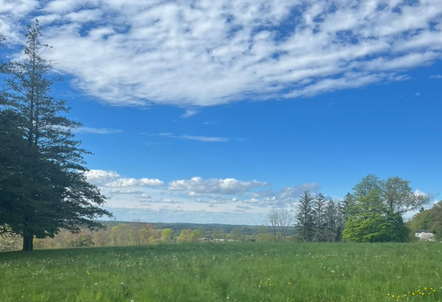
The nature at Broadmoor was so beautiful. Since our field trip took place in the beginning of fall, we got to experience the foliage and all of the plants turning a variety of colors, such as deep oranges, reds, and browns. We got to learn about the trees and plants in the woods, and how some of the people at Broadmoor did research on certain plants and tracked their growth and progress. Our tour guide informed us on how the trees and plants have been up for many years and that there were even some beavers living near the wetlands. She taught us how to identify whether a piece of wood has been carved from a beaver or has just been chopped down. We took a nice walk around the forest, and our tour guide taught us about Broadmoor’s nature.
At Broadmoor, we got to learn about the different feeding strategies and food groups. A feeding strategy or food group is a role given to animals based on the food chain. For example, we learned about decomposers and how they do not kill or eat any living things. Instead, they break down dead organisms and turn it back into soils and nutrients. For this activity, our tour guide broke us up into a few groups, each of which was assigned a food group. We explained our food group and gave an example of it. One of the groups that came up was a predator. A predator is an organism that hunts, kills, and eats other living organisms to obtain nutrients for survival. The example that a group came up with for predators was a snake. Snakes have to kill animals like large insects or small fish, making them a predator. We all had a fun time doing this activity, and we learned about each type of feeding strategies, which was very interesting.
Overall, the 7th grade field trip to Broadmoor was a very fun and interesting learning experience. The 7th grade learned a lot about Broadmoor through the activities, like observing the wetland water, group learning activities, and taking walks around the forest. After we were finished with these activities, we had our lunch, and for the rest of the afternoon, we learned how to write poems, sang some Praise and Worship music in front of God’s creation, and drew the beautiful nature and our surroundings. Our seventh grade trip to Broadmoor was a very memorable field trip, and I hope that each seventh grader will apply what we learned at Broadmoor into our learning this 2026-2027 school year.
By Isabella Tea ‘32, Contributing Writer